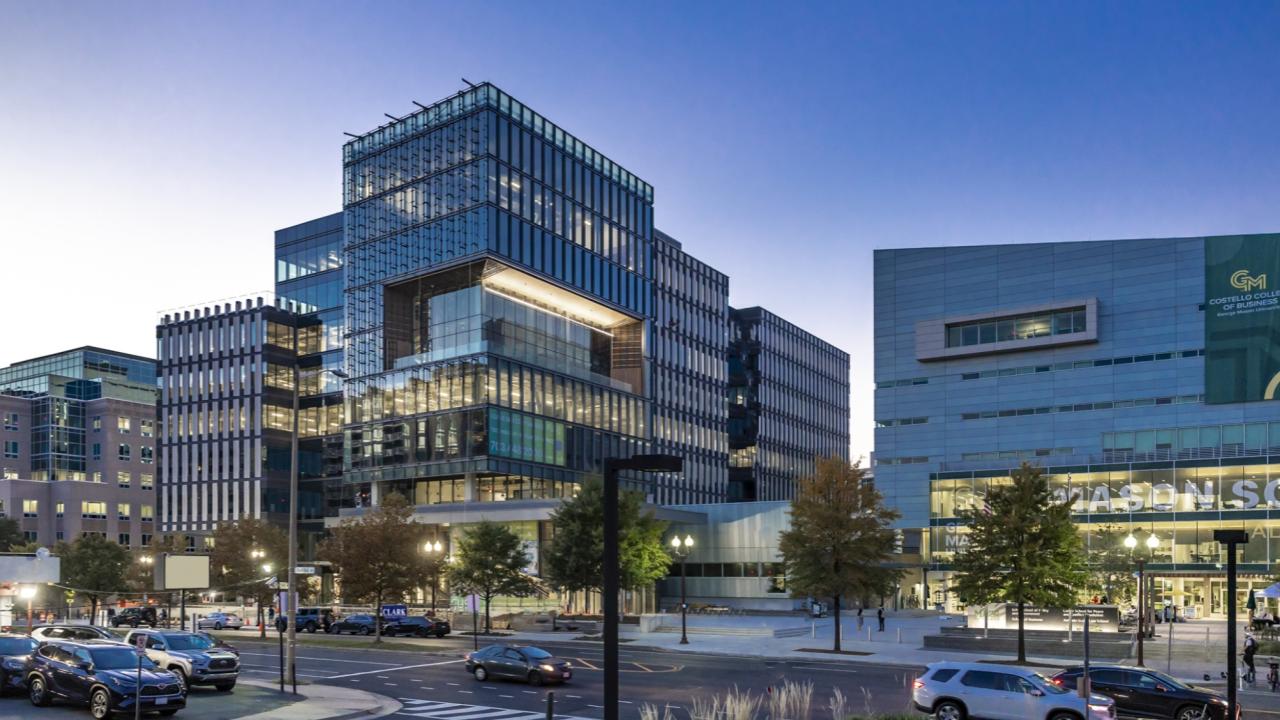

IDIA – Institute of Digital InnovAtion

Vision

The Institute of Digital InnovAtion (IDIA) is George Mason University’s commitment to inclusively shaping the future of our digital society, promoting well-being, security, and prosperity.

IDIA is a sector leader that provides transdisciplinary research, innovation, and next-generation workforce development strategy across the university for scaled, sustainable growth in digital innovation, leverages synergies, strengthening the innovation ecosystem and growing capacities for transdisciplinary research, scholarship, and innovation, supports placemaking, instigating and building research and innovation communities around places and activating and supporting a culture of transdisciplinary research and shared research infrastructure, and amplifies the visibility and awareness of George Mason University as a globally recognized leader for its world-class research, innovation, and economic impact activities, as well as its next-generation students and scholars.

OnAir Post: IDIA – Institute of Digital InnovAtion

IBI- Institute for Biohealth Innovation

The Institute for Biohealth Innovation (IBI) harnesses the collective talent of more than 300 GMU faculty and staff and thousands of students across 34 academic departments.

The IBI connects Mason researchers with potential collaborators, both within the university and externally, to take on some of biohealth’s biggest challenges. We bridge disciplines to promote progress and share innovation with the goal of enhancing health and well-being through new ideas to predict, prevent, treat, and eradicate disease. Our portfolio consists of major research thrusts, including cancer, infectious diseases, brain and behavior, injury and performance, reproductive and family health, cardiovascular and metabolic health, digital health and informatics, and policy and economics. The IBI provides a collaborative space that allows researchers to make novel connections and implement innovative solutions to today’s most pressing health issues.

The IBI’s researchers are spread across George Mason University’s campuses, located in Northern Virginia. Mason is situated in the Biohealth Capital Region (BHCR), a prominent biohealth cluster in the mid-Atlantic. BHCR is home to U.S. Federal agencies, including the NIH, NSF, and DOD, more than 800 life science companies and several accelerators to support start-ups, prominent healthcare systems, and world-class academic and research institutions.

Source: Website

OnAir Post: IBI- Institute for Biohealth Innovation

ISI- Institute for a Sustainable Earth

George Mason University Institute for a Sustainable Earth: Putting research and scholarship into action to support a just, prosperous, and sustainable world.

Mission: To connect members of the Mason community with others across the Mason community–and with other communities, policy-makers, businesses and organizations–so that, together, we can more effectively address the world’s pressing sustainability and resilience challenges.

The world is at a turning point—we either develop vastly more sustainable ways for people and other living things to prosper on Earth, or we risk truly catastrophic consequences. The ISE community conducts integrative research in the natural sciences, social sciences, computational and data sciences, engineering, and humanities, bridging disciplinary gaps to realize innovative advances in an era of rapid global change.

Source: Website

OnAir Post: ISI- Institute for a Sustainable Earth

CYSE- Cyber Security Engineering Department

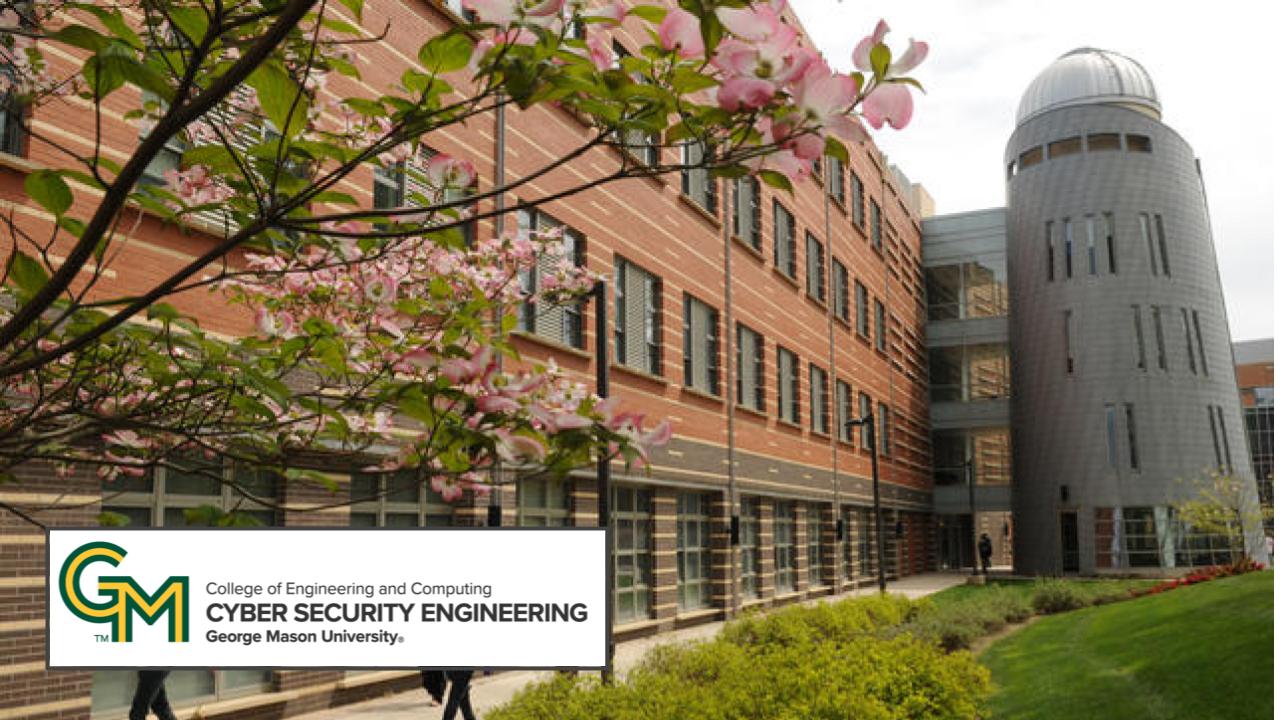
The Department of Cyber Security Engineering (CYSE) was established to meet the urgent and growing demand for professionals capable of protecting complex systems at the intersection of the physical and digital worlds.

Building on George Mason’s leadership in engineering and information security, CYSE launched the first bachelor’s program of its kind in the United States, creating a model that integrates cybersecurity into system design from the very beginning. Since then, the department has expanded to include master’s and accelerated degree programs, a thriving capstone experience, and a dynamic research enterprise recognized nationally and internationally.

Source: Website

OnAir Post: CYSE- Cyber Security Engineering Department

CS- Computer Science Department

With over 80 full-time faculty members and 12 administrative staff, theDepartment of Computer Science is the largest department in the College of Engineering and Computing, the largest department on campus, and the largest Computer Science department in the Commonwealth of Virginia.

Today, not only is computing pervasive in society, but computational methods are used in almost every field of scholarly endeavor ranging from the arts and humanities to the hard sciences and engineering, as well as every sector of industry. The department offers two Bachelor of Science programs with a total enrollment of over 2400 students: the B.S. in Computer Science and the inter-disciplinary B.S. in Applied Computer Science; three M.S. programs in Computer Science, Information Systems, and Software Engineering with a total enrollment of over 700 students; and a Ph.D. program in Computer Science of over 220 students. The department’s faculty also teach and participate in the inter-disciplinary M.S. in Data Analytics Engineering, M.S. in Artificial Intelligence, and the Ph.D. in Information Technology offered by the College of Engineering and Computing.

OnAir Post: CS- Computer Science Department

IST – Information Sciences and Technology

The Information Sciences and Technology (IST) department at George Mason is a vibrant community of coders, designers, cybersecurity specialists, AI/ML experts, and HCI researchers. Together we tackle real-world challenges-from smart technologies and transportation systems to cybersecurity and public safety solutions.

Our Vision
To lead excellence and innovation in research, teaching, and service in addressing societal problems using information sciences and technology.

IST promotes and maintains a departmental research culture by providing the facilities, means, and incentives for outstanding research. IST provides excellent education with leading-edge courses, by leveraging innovative instructional methods and emphasizing the enhanced student experience. IST provides continuous advising and mentorship to the students, faculty, and staff as well as ongoing service to the college, university, alumni, and the community.

onAir Post

Source: Website

OnAir Post: IST – Information Sciences and Technology

DAEN – Data Analytics Engineering

George Mason University’s data analytics engineering programs at Volgenau prepare students for their future careers in a growing discipline.

All of our programs are taught by our industry-leading faculty members across schools and colleges in Mason, giving our students the ability to see the numerous possibilities a data-driven degree can offer.

  • Master of Science –– The MS in data analytics engineering is a multidisciplinary degree program at the Volgenau School of Engineering. It provides students with an understanding of the technologies and methodologies necessary for data-driven decision-making.
  • Certificate –– The graduate certificate in data analytics engineering gives students a foundation of basic data analytics and data science principles.
  • Master of Science Online –– The online MS program gives students the flexibility to earn an advanced degree and expand their knowledge in data analytics in an asynchronous format.
  • Certificate Online –– The online graduate certificate in data analytics engineering gives students a foundation of basic data analytics and data science principles with the flexibility of an online asynchronous format.

Data analytics engineering is an expanding field. Therefore, all our programs instruct students on current and innovative tools and prepare them to be adaptable to the future of the field.


Source: GMU

OnAir Post: DAEN – Data Analytics Engineering

AI2 Nexus

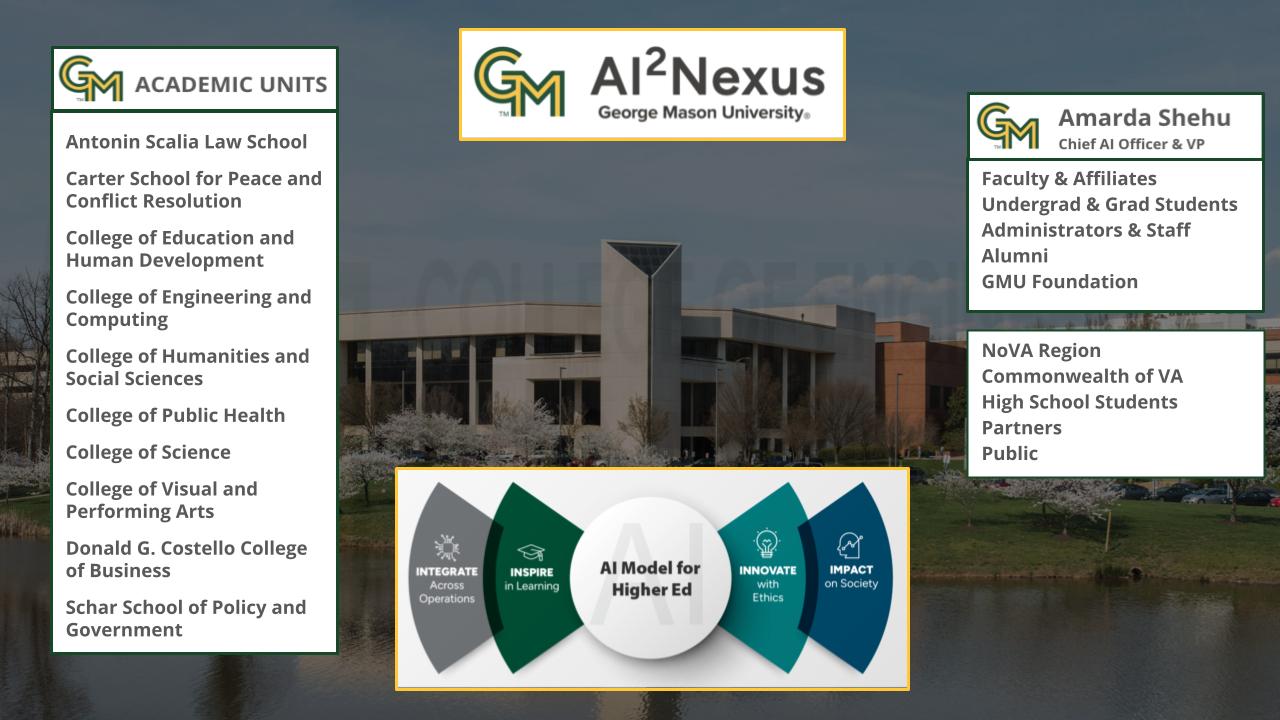
George Mason is building a nexus of collaboration and resources on campus, throughout the region with our vast partnerships, and across the state, called AI2Nexus.

As a model for universities, AI2Nexus is based on four key principles: Integrating AI to transform education, research, and operations; Inspiring with AI to advance higher education and learning for the future workforce; Innovating with AI to lead in responsible AI-enabled discovery and advancements across disciplines; and Impacting with AI to drive partnerships and community engagement for societal adoption and change.

George Mason University is driving rapid AI adoption and advancements across the Commonwealth.

As the largest and most diverse university in Virginia, just outside Washington, D.C., George Mason University is leading the future of inclusive artificial intelligence (AI) and developing responsible models for AI research, education, workforce development, and community engagement within a modern university.

As AI reshapes industries, George Mason combines fearless ideas that harness the technology’s boundless potential to address the world’s grand challenges, while creating guardrails based on informed, transdisciplinary research around ethical governance, regulatory oversight, and social impact.

Led by the university’s inaugural vice president and chief artificial intelligence officer (CAIO) Amarda Shehu with an AI Visioning Task Force, George Mason is reimagining operational excellence in every facet of the university.

Source: AI Webpage

OnAir Post: AI2 Nexus

Skip to toolbar