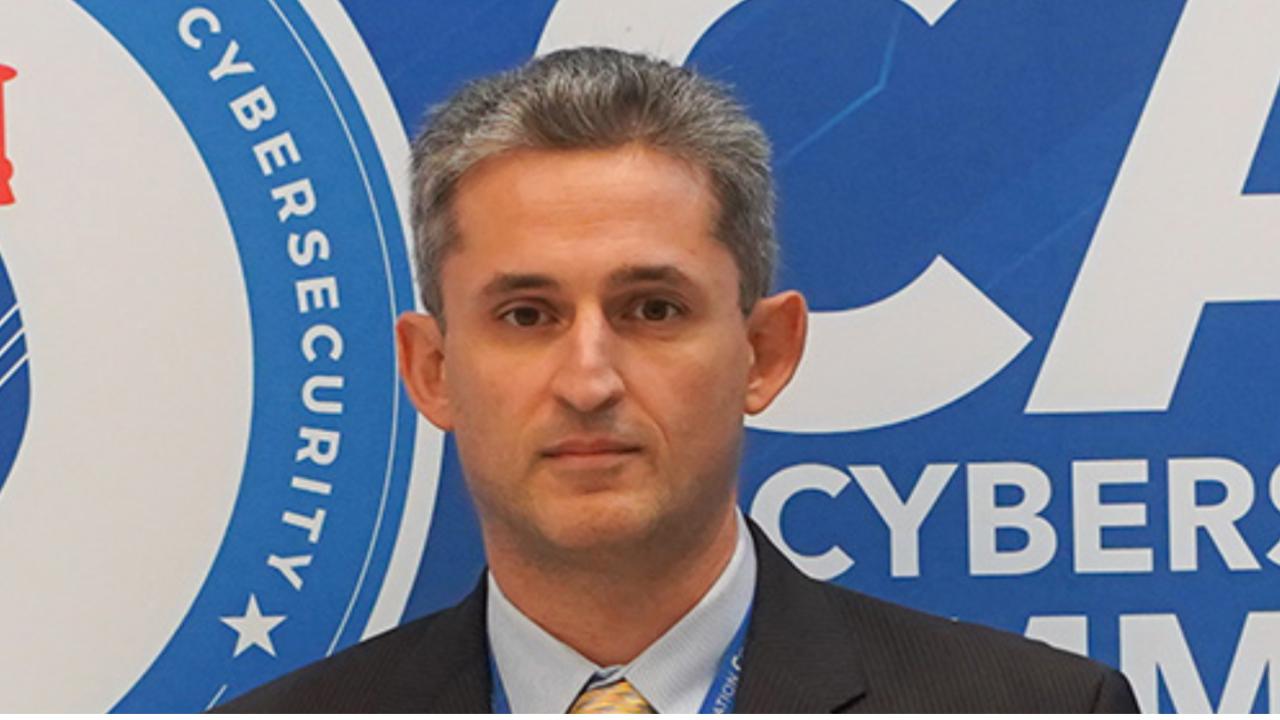
Massimiliano Albanese

I am a Professor and the Associate Chair for Research in the Department of Information Sciences and Technology at George Mason University, and I serve as the Executive Director of the Institute for Digital Innovation (IDIA) and the Director of the Center for Infrastructure Security in the Era of AI (ISEAI). I received my Ph.D. degree in Computer Science and Engineering in 2005 from the University of Naples Federico II. In 2011, I joined George Mason University after serving as a Postdoctoral Researcher at the University of Maryland, College Park.

My research interests are in the area of Information and Network Security, with a particular emphasis on Modeling and Detection of Cyber Attacks, Cyber Situational Awareness, Network Hardening, Moving Target Defense, Configuration Security, and Vulnerability Metrics. I have participated in sponsored projects totaling $13M, with my personal share amounting to $3.5M. I hold six U.S. patents and have co-authored two books as well as over 90 publications in peer-reviewed journals and conference proceedings. In 2014, I was honored as one of the three recipients of the Mason Emerging Researcher/Scholar/Creator Award, one of the most prestigious honors at Mason.

I have served on the technical program committee of numerous conferences and am a member of the Editorial Board of Springer International Journal of Information Security, Elsevier Co

Source: Website

OnAir Post: Massimiliano Albanese

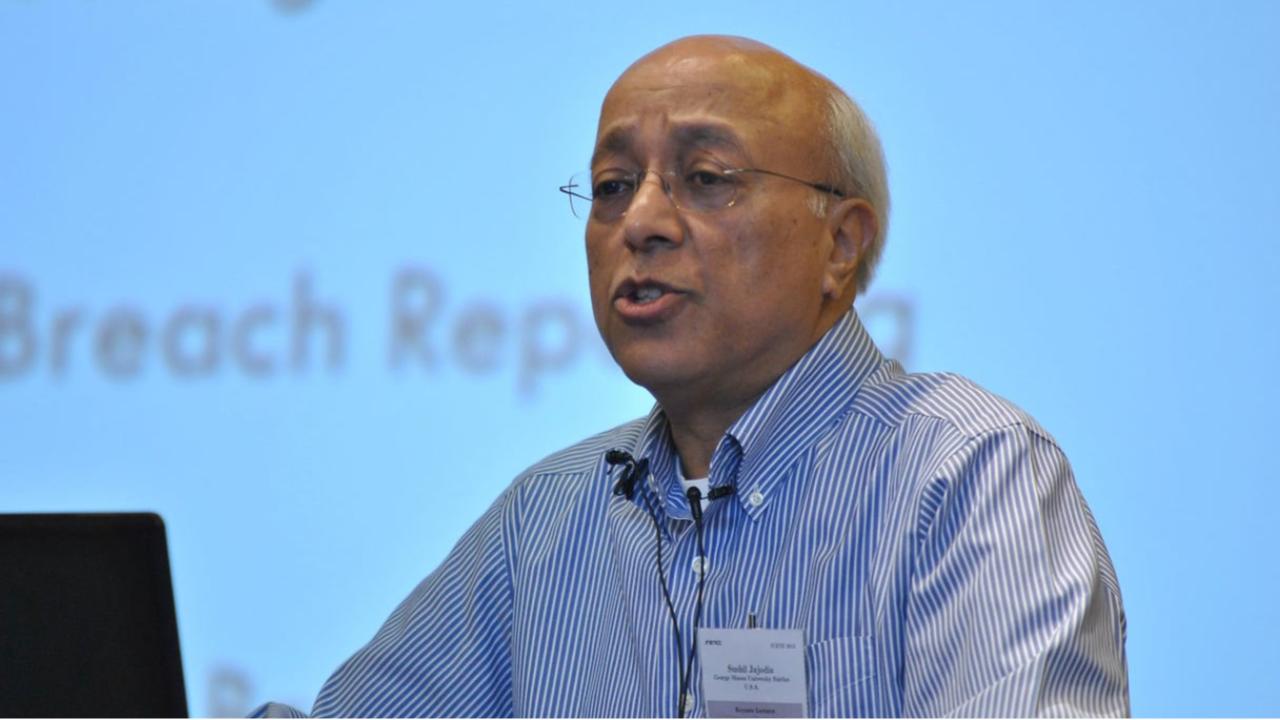
Sushil Jajodia

Sushil Jajodia is a University Professor, BDM International Professor, and the founding director of the Center for Secure Information Systems in the College of Engineering and Computing. He is also the founding site director of the NSF IUCRC Center for Configuration Analytics and Automation at Mason. His research interests include security, privacy, databases, and distributed systems. His current research sponsors are the U.S. Army Research Office (ARO), the U.S. Office of Naval Research (ONR), The U.S. National Security Administration (NSA), The National Science Foundation (NSF), the National Institute of Standards and Technology (NIST), Northrop Grumman, and The MITRE Corporation.

He was recognized for the most accepted papers at the 30th anniversary of the IEEE Symposium on Security and Privacy. His h-index is 86 and Erdös number is 2; both indicate a broad citation in scholarly publishing. He is the founding consulting editor of the Springer International Series on Advances in Information Security and SpringerBriefs in Computer Science. He has served in different capacities for various journals and conferences. Sushil Jajodia has supervised 27 doctoral dissertations.

Source: GMU webpage

OnAir Post: Sushil Jajodia

Özlem Uzuner

Özlem Uzuner, department chair of Information Sciences and Technology, speaks three languages—English, French, and Turkish—but it’s her fourth language that could help save lives.

Uzuner is an expert in natural language processing, a field of computer science that involves turning human language into coded form. She is working on algorithms that translate physicians’ narratives about their patients into data that can be analyzed to find better treatments.

Research

  • Natural Language Processing
  • Health Informatics
  • Public Health Informatics
  • Mental Health Informatics
  • Computational Social Science

Degrees

  • PhD, Technology Management and Policy, Massachusetts Institute of Technology
  • MEng, Electrical Engineering and Computer Science, Massachusetts Institute of Technology
  • BS, Electrical Engineering and Computer Science, Massachusetts Institute of Technology

Source: Website

OnAir Post: Özlem Uzuner

Ken Ball

Kenneth S. Ball, PhD, PE is Dean of the College of Engineering and Computing at George Mason University in Fairfax, Virginia. Since arriving at Mason in 2012, Ball has led the college through extensive growth and rapid change increasing research awards and expenditures, expanding enrollment, and establishing several first-of-their-kind programs to attract future generations of engineering and computing professionals.

Under Ball’s leadership, the college’s ranking and reputation have improved. In the most recent U.S. News and World Report rankings of our nation’s Best Graduate Schools, the college placed in the top 100 among public universities. Ball helped the college keep pace with its strong growth in student enrollment, advocating for more faculty and staff. He led a proactive response to the needs of our students, placing a high priority on ensuring the college has the faculty to maintain student-faculty ratios to allow vigorous levels of student-faculty interaction and mentoring, to limit the number of large-enrollment classes, and to be able to offer all of the courses that students need to graduate, including elective courses. These efforts keep diversity and inclusion at the forefront by expanding access and inclusion.

Source: webpage

OnAir Post: Ken Ball

Paulo Costa

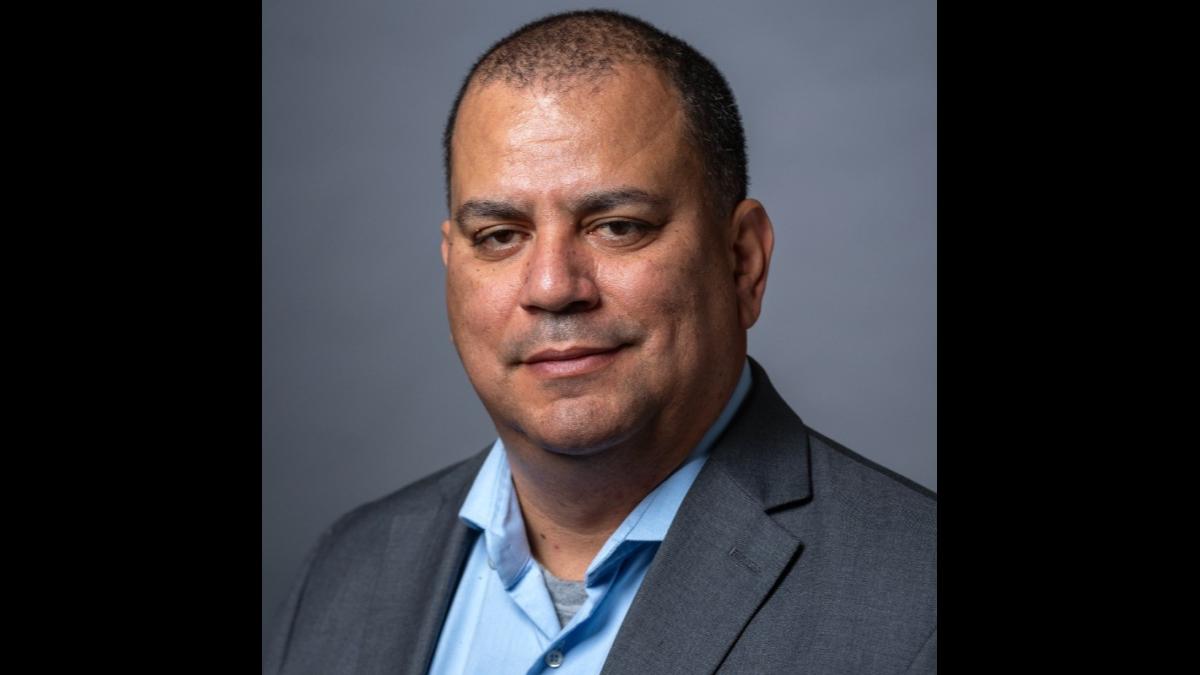
Paulo Costa has applied his significant experience as a fighter pilot to a career specializing in the field of electronic warfare and flight safety, which in conjunction with his research on probabilistic reasoning has led to applications in cyber and transportation security, heterogeneous data fusion, and decision support systems in healthcare, defense, and other areas. These topics are at the core of his classroom activities at both graduate and undergraduate levels, as well as his research path. Costa leads the research of graduate-level students in understanding security objectives and verification protocols, bringing in the science of probabilistic reasoning and challenging PhD-level candidates to consider theory and methods for building computationally efficient software agents that reason, act, and learn in environments characterized by noisy and chaotic traffic.

Costa is a key researcher in the field of probabilistic ontologies and has developed innovative applications and extensions that aid in the fight against cyber-warfare. In addition to his Mason assignments as Chair of the Cyber Security Engineering Department and Director of the C5I Center, Dr. Costa is Vice President for Securing Automation and Supply Chain Security (cymanii.org). He is a former President and current elected member of the Board of Directors of the International Society of Information Fusion (isif.org), as well as an IEEE Senior Member (SM13).

Degrees

  • PhD, Information Technology, George Mason University
  • MS, Systems Engineering, George Mason University
  • BS, Engineering, Brazilian Air Force Academy

Source: CEC Page
OnAir Post: Paulo Costa

Alexandre Barreto

Alexandre Barreto is an Associate Professor, Department of Cyber Security Engineering at George Mason University.

He has applied his significant experience as an air traffic and air defense infrastructure manager to a career specializing in the field of cybersecurity and networking, which in conjunction with his research on cyber impact assessment, has led to applications in cyber and transportation security, and decision support systems in defense and critical infrastructure areas. These topics are at the core of his classroom activities at both graduate and undergraduate levels, as well as his research path.

Barreto is a researcher in impact assessment and secure air transportation protocols and developed innovative applications and extensions that aid in the fight against cyber-warfare. He received his MS and PhD from Instituto Tecnológico de Aeronáutica in Brazil.

OnAir Post: Alexandre Barreto

Connor Wadlin

I’m Connor Wadlin, a Cybersecurity specialist with a keen eye on the world around me! As an Engineer, my focus is on improving the lives of everyone, not just the rich and powerful.

At onAir, I am the Hub Coordinator for Cybersecurity. That means I do a little bit of everything, from curating posts, hosting my own onAircast series titled “Cybersecurity @GMU”, and helping others do the same. My focus is on providing the BEST platform for people to learn, discuss, and engage around Cybersecurity so that we can ALL live happier, safer, and more fulfilling lives together!

I’m happy you’re here, so thank you for taking some time out of your day to learn 🙂

OnAir Post: Connor Wadlin

Brian Krebs

Brian Krebs worked as a reporter for The Washington Post from 1995 to 2009, authoring more than 1,300 blog posts for the Security Fix blog, as well as hundreds of stories for washingtonpost.com and The Washington Post newspaper, including eight front-page stories in the dead-tree edition and a Post Magazine cover piece on botnet operators.

In 2014, he was profiled in The New York Times, Business Week, NPR’s Terry Gross, and by Poynter.org. More recently, he was invited to an “Ask Me Anything” discussion on Reddit about investigative reporting.

Testing 1, 2, 3

Source: Website

OnAir Post: Brian Krebs

Skip to toolbar